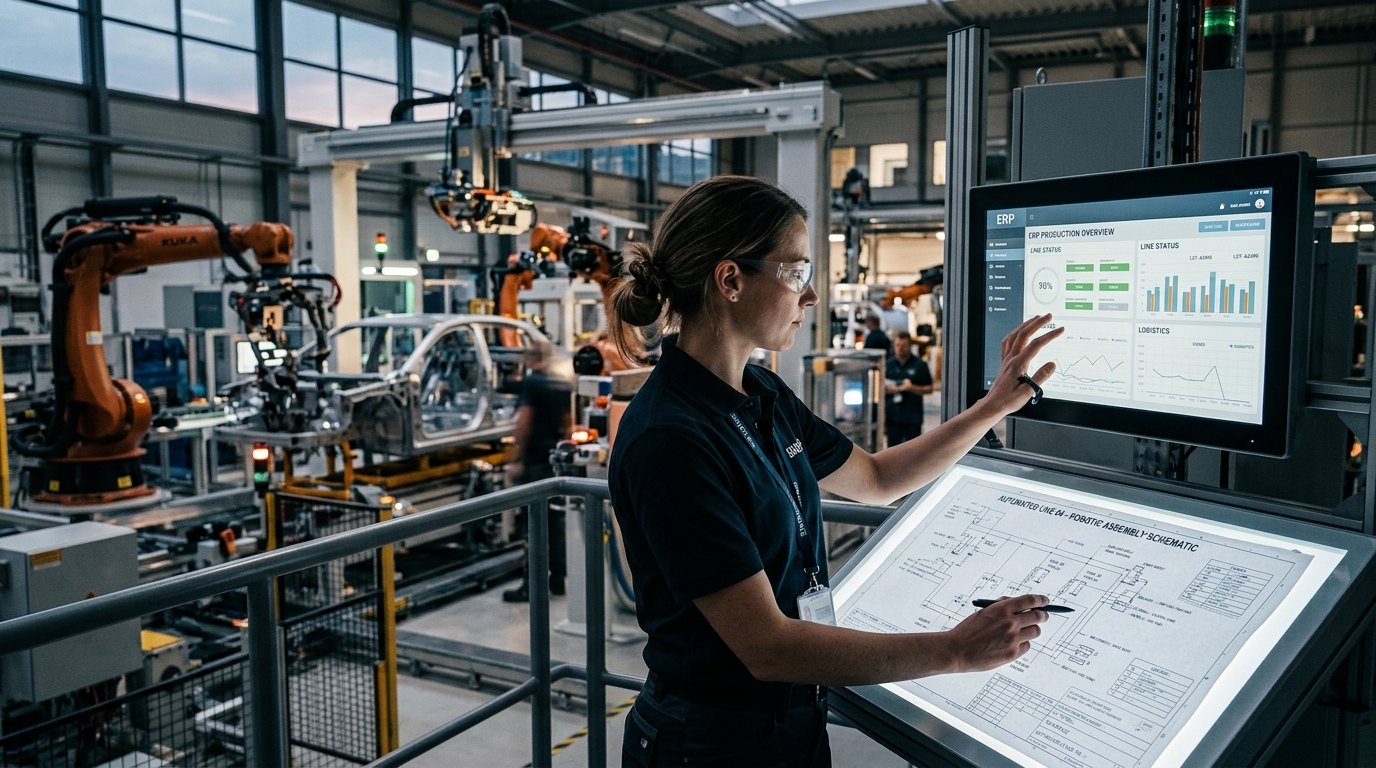
Manufacturing and supply chain operations present unique software engineering challenges. High data velocity, multi-tier dependencies in Bill of Materials (BOM), shop floor shop-card tracking, and real-time inventory adjustments require rock-solid relational architectures that cannot afford downtime or race conditions.
Multi-Level BOM Complexity & Database Design
An industrial assembly might consist of hundreds of raw materials, sub-assemblies, and labor processes. A single price change in steel or motor components must dynamically cascade across all downstream quotes and batch cost projections.
Designing recursive tree structures with efficient indexing in PostgreSQL ensures sub-millisecond calculation of complex BOM rollups even across millions of historical production records.
Shop Floor Usability and Barcode Automation
An ERP is only as accurate as the data fed into it by operators on the shop floor. If an interface requires 10 clicks to mark a batch complete, operators will bypass the system.
By designing simplified tablet-first interfaces with instant barcode scanning, single-tap scrap logging, and automated bin allocation, physical reality matches digital inventory in real time.
“The best ERP software is invisible on the factory floor—it captures truth effortlessly as work occurs.”
— Architectural Principle
Audit Trails and Regulatory Traceability
Whether complying with ISO standards, export certifications, or aerospace requirements, full auditability is essential. Immutable ledger logging ensures every batch status change, inventory transfer, and quality sign-off is cryptographically timestamped and attributed.
- ✓Design schema to handle multi-level recursive BOMs with zero calculation lag.
- ✓Prioritize high-contrast, touch-optimized shop floor interfaces with barcode support.
- ✓Implement immutable audit logs for regulatory compliance and batch tracing.
- ✓Automate reorder triggers based on real lead-time forecasting.